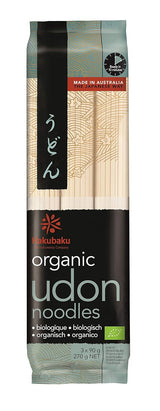
Hakubaku USDA Organic Udon – Neutral-Flavor Noodle for Versatile Minimalist Cooking
Hakubaku USDA Organic Udon – Neutral-Flavor Noodle for Versatile Minimalist Cooking
Couldn't load pickup availability
Why you'll love it
- USDA organic certification reassures buyers avoiding pesticides and synthetic additives
- Kosher certification opens the product to observant Jewish households often underserved by Japanese brands
- Authentic Japanese udon delivers genuine texture and taste vs. generic wheat noodles
- Dual cooking instructions (10 min boil / 8 min stir-fry) make it versatile for multiple cuisines
- Short cook time fits busy weeknight schedules better than long-simmered alternatives
- Clean, single-ingredient organic wheat appeals to minimal-ingredient shoppers
- Rated #2 in the udon noodles category
- No added salt / lower sodium than instant udon packets
- Neutral flavor makes them versatile for non-Asian dishes
- Noodles separate easily after cooking
- Holds up well in both stir-fry and broth without getting mushy
- 3 individually portioned bundles per package, each sized for one person
- Hard-to-find item, especially in certain U.S. regions (e.g., Michigan) where local stores don't carry them
- Cooks in 5 minutes from start to finish
- Husband (Japanese) approved the taste
Perfect for
- Quick weeknight udon soup base ready in 10 minutes
- Stir-fry noodle component (8-minute cook for stir-fries)
- Authentic Japanese hot or cold noodle bowl
- Bulk pantry stocking for meal prep (Pack of 4)
- Vegetarian-friendly noodle option for Meatless Monday meals
- Pinterest-inspired miso and curry noodle recipes
- Homemade teriyaki dishes
- Udon soup with pork and bok choy
- Stir-fry (in addition to broth)
- Substitute for linguine in Italian-style dishes
- Making Lo mein
- Making pancit (Filipino stir-fry noodles)
- Ghee and salt as a simple finish for kids' meals

About Us
Hakubaku, since its foundation in Japan, has been working on delicious tasting grains We keep striving to explore new possibilities of grains every day.
What does Hakubaku mean? “Hakubaku” means “White Barley” in Japanese. It describes Hakubaku’s desire that our customers will enjoy nutrient-rich “Barley” in the same way as white rice, which is primary food in Japan. Since the foundation, we have been deeply involved with 5 Grains; Barley, Rice, Millet, Wheat and Soba(Buckwheat). Our corporate logo expresses that 5 Grains will spread worldwide thereafter. “Kokumotsu” means “Grain” in Japanese. In view of our corporate history and our determination to keep providing the ideal diet, we define ourselves as “The Kokumotsu Company”. We continue to deepen our knowledge on grains and realize “The Kokumotsu Company” through providing new innovations in grain products and processing technology.
Product Information
Authentic Japanese udon noodles USDA certified organic Kosher certified. Cooking Instructions: Boil for 10 minutes Boil for 8 minutes for stir-fries
Product Dimensions : 8 x 3 x 1 inches; 9.5 ounces Item model number : 62559 UPC : 837328001002 837328000005 786173764924 Manufacturer : Hakubaku Units : 9.52 Ounce Best Sellers Rank: #12,823 in Grocery & Gourmet Food Authentic Japanese udon noodles USDA certified organic Kosher certified. Cooking Instructions: Boil for 10 minutes Boil for 8 minutes for stir-fries Ingredients Hakubaku Organic Udon Wheat Noodle (1 x 9.5 OZ) Directions: Boil for 10 minutes. Boil for 8 minutes for stir-fries. Legal Disclaimer Statements regarding dietary supplements have not been evaluated by the FDA and are not intended to diagnose, treat, cure, or prevent any disease or health condition.
Frequently Asked Questions
Is the ingredient list truly minimal?
Yes. The noodles are made from a single ingredient — USDA certified organic wheat — with no added salt, preservatives, or synthetic additives.
Does the packaging fit a clean, uncluttered pantry aesthetic?
Yes. The packaging is simple and understated, and the individual bundles inside keep the pantry looking organized rather than bulky.
Will this product take up a lot of space in a small kitchen?
No. Dried udon noodles are compact, and the three individually portioned bundles stack neatly, which suits minimalist kitchens with limited storage.
Can one product really serve multiple cuisines, or do I need separate noodles?
You can use these noodles for udon soup, stir-fry, lo mein, pancit, teriyaki dishes, and even as a linguine substitute, so one well-chosen product can replace several specialty items in the pantry.
Is this a true single-ingredient food?
Yes. The noodles are made from USDA certified organic wheat and water, with no added salt in the noodles themselves, which is a clean-label choice for minimalist shoppers.
Does the bulk Pack of 4 add clutter, or is it actually tidier?
The bulk Pack of 4 reduces packaging waste and keeps the pantry stocked for longer, which many minimalists prefer over buying multiple smaller packages.
How does this compare to artisan fresh pasta for a minimalist kitchen?
Unlike fresh pasta, which is perishable and must be used quickly, dried organic udon has a long shelf life and stores easily, which is a better fit for an uncluttered, low-maintenance pantry.
How does this compare to flavored instant noodle cups?
Flavored instant noodle cups usually come with multiple seasoning packets, additives, and extra packaging. Hakubaku Organic Udon is a single-ingredient product with a much simpler footprint.
Will the noodles work in an Italian-style dish as a linguine substitute?
Yes. The noodles have a neutral flavor and firm texture, which makes them a viable substitute for linguine in Italian-style dishes, so you do not need a separate pasta in the pantry.
Is the product non-GMO, or do I need to verify that separately?
USDA organic certification prohibits the use of GMOs, so you do not need a separate non-GMO label to feel confident about the sourcing.
Does this product require any special storage?
No. It stores at room temperature in a dry pantry, which fits the low-maintenance approach of a minimalist kitchen.
Are the cooking instructions simple enough to follow without extra steps?
Yes. The package offers two clear paths — a 10-minute boil or an 8-minute stir-fry — with no extra steps, resting times, or special techniques required.
Will I need to buy many extra ingredients to make a complete meal?
No. A simple finish of ghee and salt works for kids, and the neutral flavor means you can dress it up or down with whatever you already have in the pantry.
Is the portioning system truly convenient, or just marketing?
Customers find the three individually bundled one-person portions genuinely useful, since each bundle is ready to drop into boiling water without measuring or breaking apart a single large block of noodles.
Does this product add visual clutter to a neutral-toned pantry?
The packaging is clean and neutral, and the noodles themselves tuck away easily, so it blends into an intentional, neutral-toned pantry rather than standing out.
How does this fit a less-is-more cooking philosophy?
Because the noodles are a clean, single-ingredient product with a neutral flavor, you can build a wide range of meals around them without needing a long list of specialty ingredients, which is the essence of minimalist cooking.
How do I cook Hakubaku Organic Udon noodles using the boil method?
Bring a pot of water to a boil, add the noodles, and cook for about 10 minutes until tender but still chewy. Drain, rinse briefly under warm water to separate the strands, and add to your broth, sauce, or finishing ingredients of choice.
How do I cook Hakubaku Organic Udon noodles for a stir-fry?
Cook the noodles in boiling water for about 8 minutes until just tender, then drain and add them directly to a hot pan with your stir-fry sauce, vegetables, and protein. Toss for a minute so the noodles absorb the flavor without getting mushy.
Can I serve these noodles hot or cold?
Yes. The noodles work well in both hot udon soup bowls and chilled noodle dishes, so you can enjoy them year-round in either preparation.
Are these noodles compatible with an instant pot or rice cooker?
They are designed for stovetop boiling or stir-frying, but you can steam or warm them in an instant pot or rice cooker as part of a larger dish, adding them near the end so they do not overcook.
Do these noodles work with gluten-free recipes?
No. Hakubaku Organic Udon is made from organic wheat, so it contains gluten and is not suitable for gluten-free diets.
What is included in the package when it arrives?
Each package contains three individually portioned bundles of dried organic udon noodles, each bundle sized for one person. You do not need to buy anything separately to cook them, though you will want broth, sauce, or finishing ingredients for a complete meal.
Is this product safe for people with wheat allergies?
No. The noodles are made from organic wheat, so they are not safe for anyone with a wheat allergy or celiac disease.
How long do these dried udon noodles last in the pantry?
Dried organic udon noodles have a long pantry shelf life when stored in a cool, dry place, which is one of the reasons the bulk Pack of 4 is popular for stocking up.
What is the difference between Japanese udon noodles and Italian pasta?
Japanese udon is made from wheat flour, water, and salt, with a thicker, chewier strand and a neutral flavor that takes on broths and sauces well. Italian pasta comes in many shapes and is typically made from durum wheat semolina, giving it a firmer bite and a different flavor profile. Hakubaku Organic Udon can even be used as a linguine substitute in Italian-style dishes.